



 Product Inquiry:137-7170-5679
Main Features
· Forced sealing, reliable shutoff: The disc exerts vertical pressure on the seat when closed, providing tight sealing with extremely low leakage, making it an excellent shutoff valve.
· Simple structure, easy maintenance: Relatively simple structure, with the sealing surfaces of the seat and disc easy to repair or replace.
· High flow resistance and large pressure loss: As the medium changes flow direction inside the valve (S-shaped flow path), fluid resistance is significantly higher than that of gate valves or ball valves, making it unsuitable for low-pressure-drop applications.
· Unidirectional flow, fixed direction: A flow direction arrow is usually marked on the valve body, requiring installation in a "low-inlet, high-outlet" manner. The medium flows in below the disc to assist sealing and reduce operating torque via medium pressure.
· High operating torque, slow opening and closing: Medium pressure must be overcome during operation, resulting in high operating torque, long stroke and slow operation.
· Poor regulation performance: The disc lift height is not linearly proportional to flow rate, so it is not suitable for precise flow regulation. Long-term throttling will cause severe erosion of sealing surfaces.
· Wide applicability: Suitable for various media such as steam, water, oil products and various gases, with a wide range of applicable pressures and temperatures.
■ Technical Parameters
| Parameter Category | Specific Parameters | Unit/Description | Typical Range / Significance |
| Basic Specification | Nominal Diameter (DN) | mm | DN6 ~ DN300 (common range; larger diameters are uneconomical) |
| Nominal Pressure (PN) | MPa/Class | PN1.6 ~ PN16.0 (Class 150 ~ 900), high pressure up to PN42.0 | |
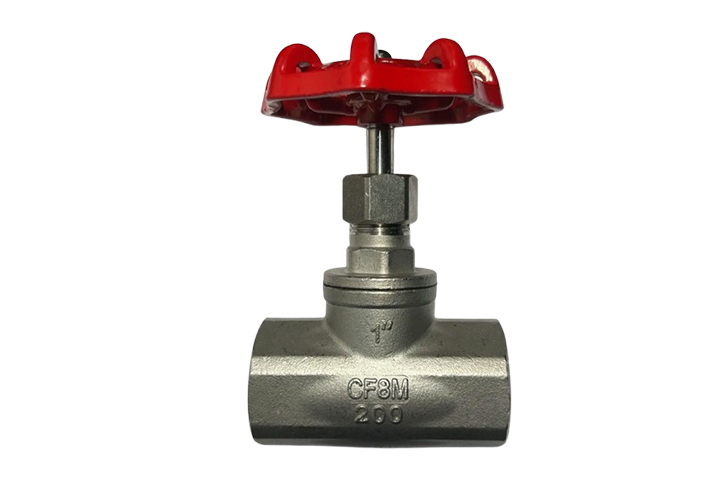
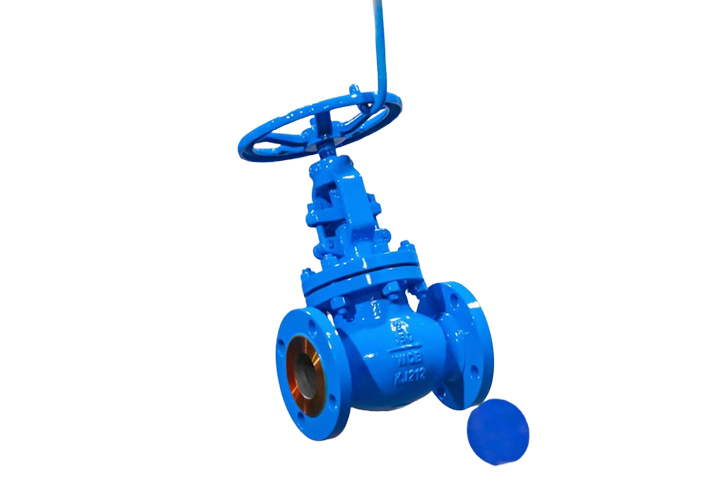
| Connection Type | - | Flanged, threaded, welded (butt-welded / socket-welded) | |
| Structural Performance | Structure Type | - | Straight-through (standard), angle type, Y-type (straight flow); Y-type features significantly reduced flow resistance |
| Flow Direction Requirement | - | Must be installed as "low inlet, high outlet" (standard type); valve body is marked with permanent flow direction arrow | |
| Stem Movement | - | Rising stem (open stem), non-rising stem (concealed stem) | |
| Sealing Type | - | Flat seal, conical seal, spherical seal | |
| Performance Parameters | Flow Coefficient (Kv) | m³/h | Relatively low due to high flow resistance; specific values to be checked according to model |
| Leakage Class | ANSI/FCI | Generally Class IV or V; metal seal can reach Class VI (soft seal can achieve zero leakage) | |
| Full Open Flow Resistance Coefficient | - | Relatively large, much higher than gate valves and ball valves | |
| Operating Torque | N·m | Relatively large, especially during opening and closing under high pressure differential | |
| Opening and Closing Stroke | mm / turns | Long stroke, slow opening and closing speed | |
| Material & Medium | Valve Body Material | - | WCB carbon steel, 304/316 stainless steel, alloy steel, bronze |
| Disc / Seat Material | - | 13Cr, 304+STL, 316+STL, or base material with hard alloy overlay welding | |
| Sealing Face Material | - | Metal hard seal, soft seal (PTFE, reinforced graphite) | |
| Suitable Medium | - | Various gases and liquids such as steam, water, oil products, ammonia, natural gas, etc. | |
| Medium Temperature Range | ℃ | -196℃ ~ +550℃ (wide range, depending on material and seal) | |
| Actuation Mode | Operation Mode | - | Handwheel, gearbox, electric actuator, pneumatic actuator |